B is for Binding: foods that help firm things up
By Mira Sefton · 16 June 2026 · 5 min read
You've had a rough morning. Output's loose, you're going more often than you'd like, and you just want something to eat that won't make it worse. That's the moment the Binding signal is about.
On Toots & Trots, Binding (B) is the helpful, protective one. It's the counterweight to Stool-loosening. A high B score is our modelled estimate that a food may help slow things down and firm output up — the opposite of sending you running.
What "binding" actually means
When we say a food is binding, we mean many people find it helps thicken or firm what comes out, and sometimes slows how fast things move through. These tend to be gentle, low-residue starches — "low residue" just means they leave little undigested fibre behind to bulk things up or speed them along.
The usual suspects:
- White rice
- Smooth porridge or well-cooked oats
- Ripe banana
- White bread or toast
- Peeled potato (boiled or mashed)
- Plain pasta
- Plain crackers
These are the "got me through a rough week" foods. They're easy to chew, easy to digest, and they don't ask much of your gut. There's a reason so many people reach for white rice and toast when things are unsettled — they're soft, starchy, and low in the kinds of fibre that can stir things up.
The evidence here is honest but modest. Some of these foods, like ripe banana and white rice, turn up again and again in what people tell us helps. Others are more about general experience than hard trial data. Either way, treat the B score as a gentle estimate, not a promise.
Firming up and staying topped up go together
Here's the part it's easy to miss. When output is loose or frequent, you're losing fluid and electrolytes — sodium, potassium, that sort of thing. Firming things up is half the job. Keeping your fluids and salts up is the other half.
Think of it like this: binding foods help with the texture, but they don't replace what you've already lost. So while you're leaning on those gentle starches, keep sipping. Many people find plain water alone isn't quite enough on a bad day — an oral rehydration drink or something with a bit of salt in it does more than water on its own, especially if you've got a J-pouch or an ostomy and lose fluid quickly.
A ripe banana is a tidy example of both at once: gentle, often binding, and a decent source of potassium.
The shaker trick
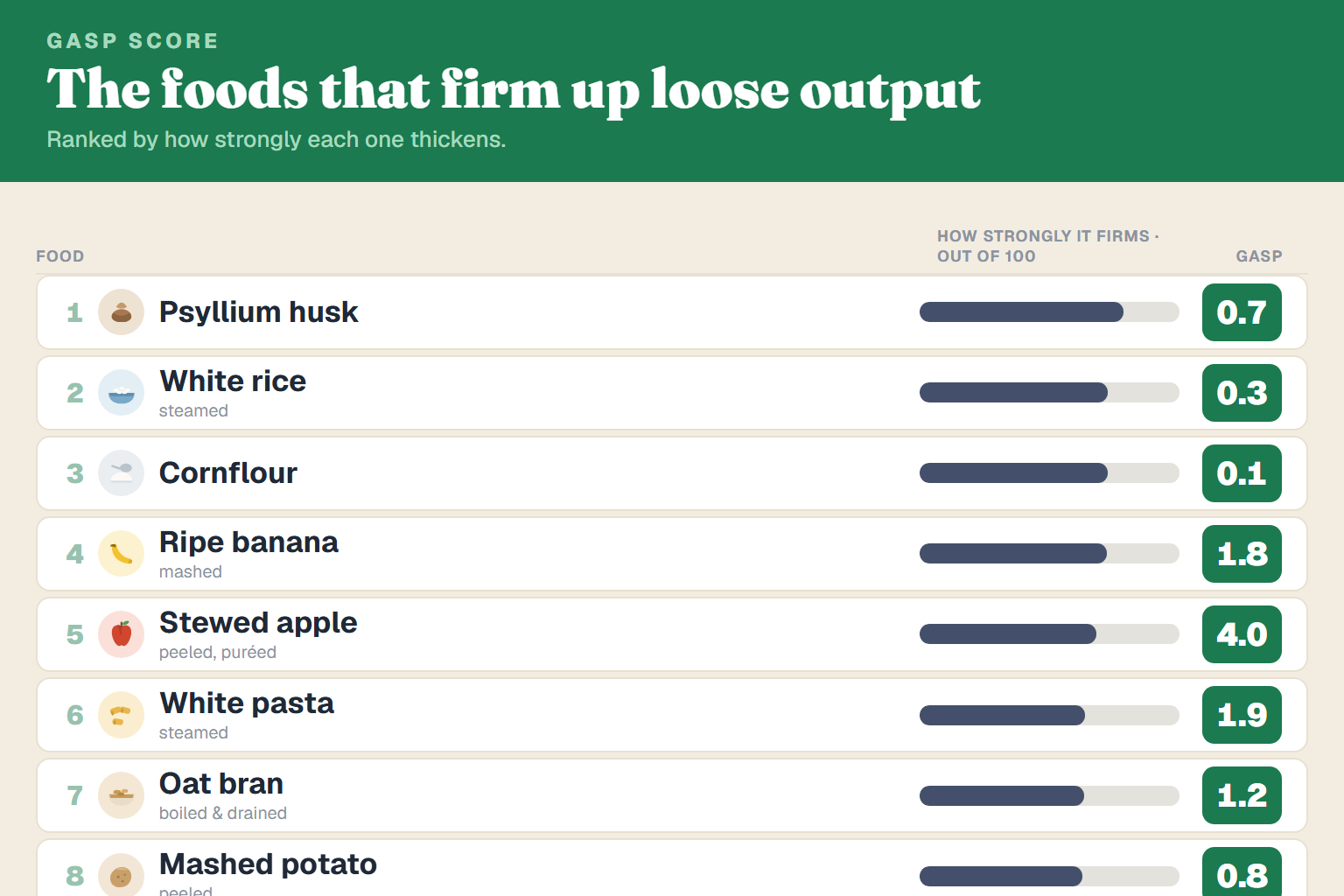
One of the handiest binders isn't really a food at all. Psyllium husk scores 0.7 on the GASP Score — about as gentle as anything we model — and it's soluble fibre, so it soaks up water and turns to gel rather than adding coarse bulk.
The trick many people land on is to stop treating it as a drink. Tip it into an empty herb or salt shaker — the sort you'd keep Italian herbs in — and leave it on the table. Then you can sprinkle a little over whatever you're already eating.
Peanut butter on toast in the morning. A sandwich at lunch. Over the top of a soup or a curry. Potatoes, meat, or anything on the plate that tends to run through you. Sprinkled dry over the top as you eat, it barely registers — very little flavour, and it doesn't change the texture of the food the way it would if you stirred it through.
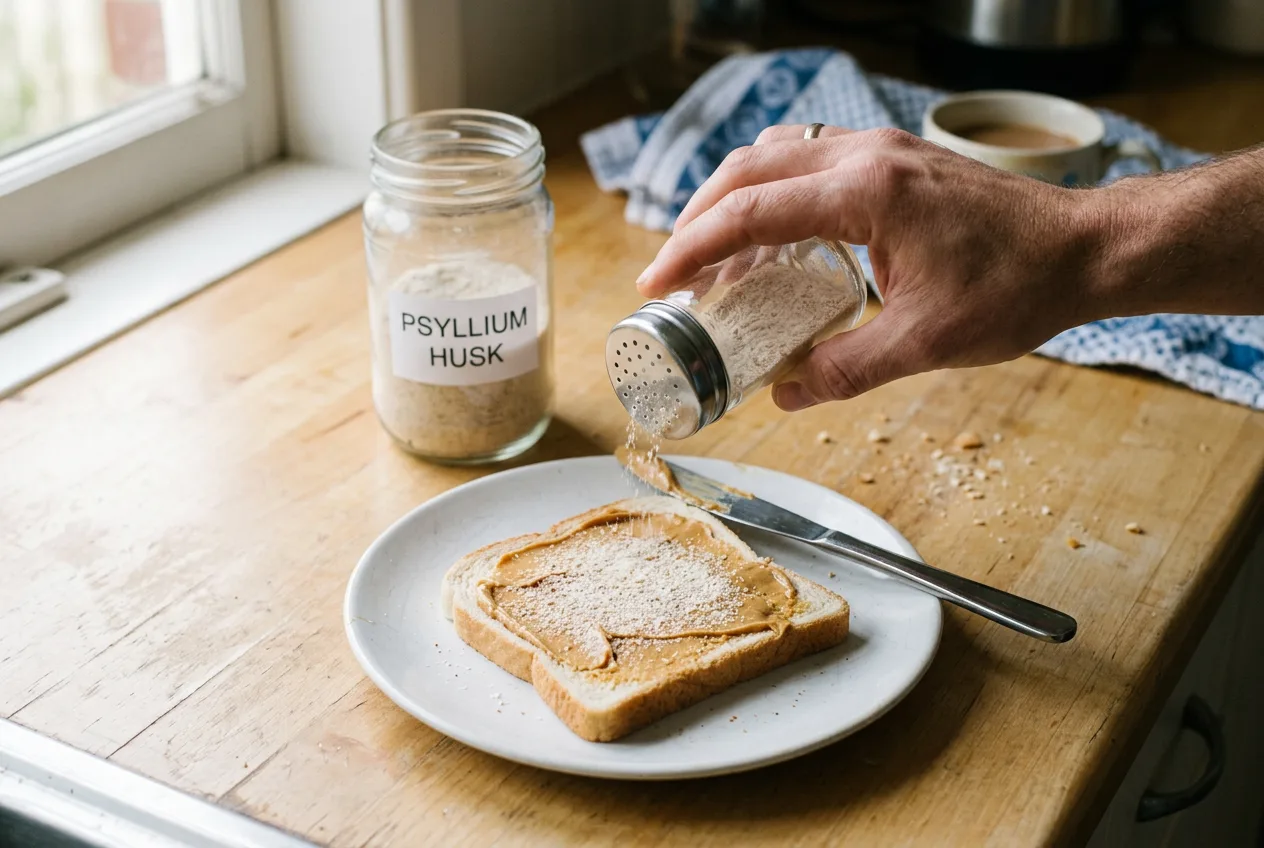
That last part is the bit worth knowing. Stir psyllium into a sauce and it thickens the sauce on your plate, much like a cornflour slurry. Sprinkle it over the top instead and it does its thickening further down, which is usually where you wanted it in the first place.
It needs fluid to do its job. Psyllium firms things up by holding onto water, so have a drink alongside it rather than taking it dry on its own. Start small — a light shake rather than a spoonful — and build up over a few days while you see how you go.
Some people find it steadies output without the cramping or wind that other fibre supplements can bring, which is part of why it's such a useful one to have on the table. As always, it's personal: try it on one meal a day to begin with, and notice what actually changes for you.
A few honest caveats
Binding foods aren't a cure, and they're not a free pass either. Leaning on white bread and pasta for weeks on end isn't balanced eating, and it's worth getting back to variety once things settle. If output stays loose for days, you're very thirsty, or you feel light-headed, that's a conversation with your team — not something a bowl of rice fixes.
And this is all personal. Plenty of people swear by oats; for a few, oats sit oddly. One person's reliable banana is another's "not today". The only way to know your own gentle binders is to try one thing at a time and watch what happens for you.
Finding your own
The B score is there to give you a starting shortlist, not the final word. When you're planning a careful day, you could browse the food scores and look for foods with a higher Binding signal, then test the ones that appeal to you.
Keep it slow. Add one food back at a time, give it a day or two, and notice whether it helped, did nothing, or made things worse. Over a few weeks you'll build your own small list of foods that steady the ship — and that list is worth more than any score we can model.