Cook once, eat two ways: family dinners with a J-pouch
By Robin Tasker · 16 June 2026 · 4 min read
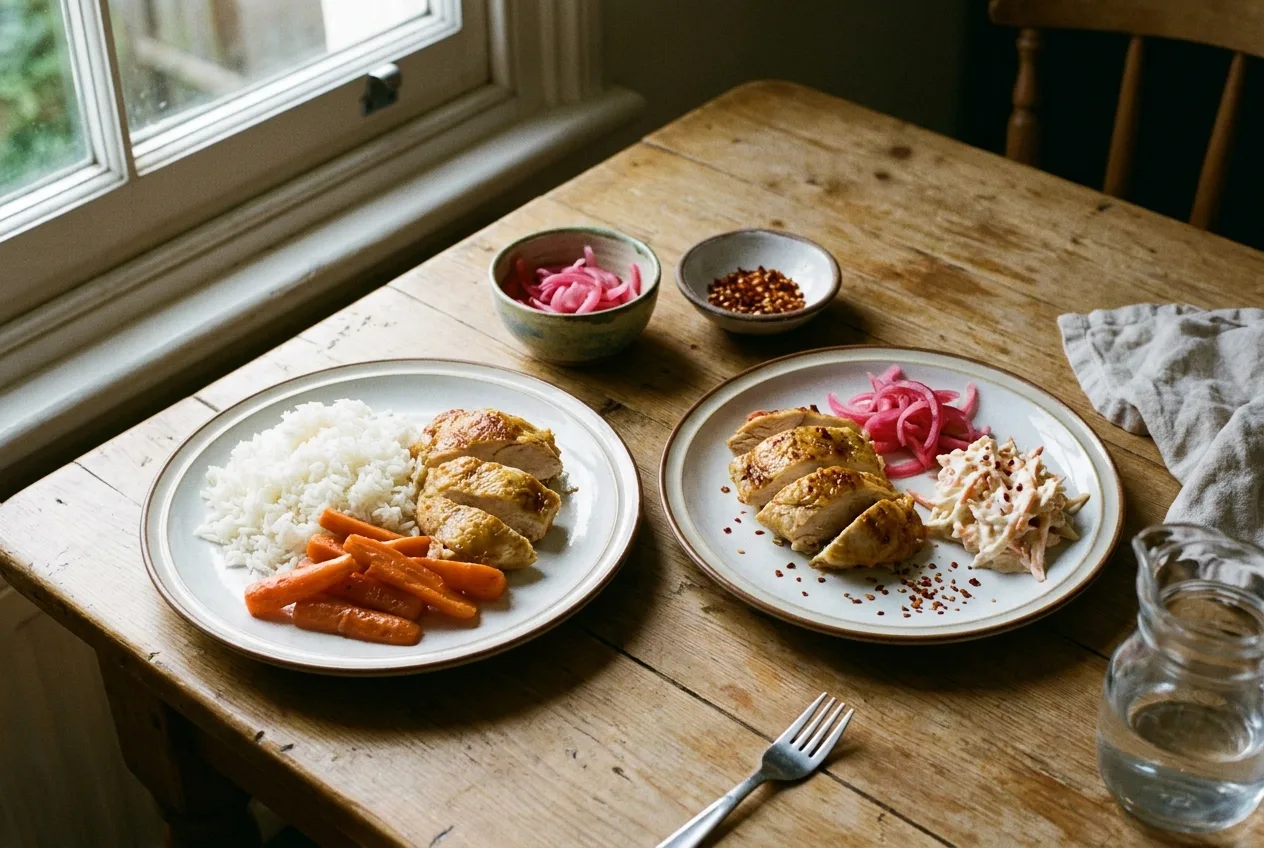
For a while there, dinner was the loneliest meal of the day. The family would have their plates piled high, and I'd be off to the side with my own little bowl of something beige. It felt like punishment for everyone, including them.
The thing that fixed it wasn't a recipe. It was a way of thinking: cook one gentle base, then let everyone else build on top of it.
The idea: a shared base, then add-ons at the end
Most of what makes a meal harder on a J-pouch gut gets added near the end — the raw onion, the garlic-heavy sauce, the chilli, the crunchy slaw, the pickled stuff. So I stopped building those things into the cooking and started keeping them on the side.
The base is the part everyone shares. The bits that might mean a rough night for me sit in little bowls on the table, and the family helps themselves.
Nobody gets a separate dinner. I'm eating the same meal, just a quieter version of it.
Burger night, the way we actually do it
This is the one that won me back. Burger night used to be a write-off for me. Now it's one of my favourites.
The shared base:
- Crumbed fish (gentle, and it crisps up like a proper burger filling)
- A soft bun
- Cheese
- Hot chips on the side
What the family piles on at the table:
- Pickled onion
- Coleslaw
- Raw red onion
- A good whack of chilli sauce
I keep mine simpler — fish, cheese, bun, chips — and I don't feel like I'm missing out, because I'm eating the same dinner they are. The kids think the bowls of toppings are a treat. I think they're a divider that keeps my night calm.
If you want to see why those add-ons get parked, the onion and garlic scores explain the fructan side of it, and our food scores cover a lot of the usual toppings.
Why the add-on trick works so well
The hard stuff is nearly always optional and nearly always last. Think about it:
| Meal | Gentle shared base | Add at the table |
|---|---|---|
| Tacos | Mince, rice, cheese, soft tortilla | Onion, salsa, jalapeños, raw cabbage |
| Pasta | Plain or tomato-light sauce, pasta | Garlic oil, chilli flakes, rocket |
| Roast | Meat, sweet potato, carrot | Onion gravy, pickles, slaw |
| Stir-fry | Rice, chicken, courgette | Raw spring onion, chilli, garlic sauce |
Cook the base low on onion and garlic, then let everyone else season their own plate. You're not making two dinners. You're making one and finishing it two ways.
A few things I've learned the hard way
Keep the toppings physically separate until plating. Once raw onion has been sitting in the slaw, the slaw's no longer a quiet option for me. Separate bowls, separate spoons.
Cook with oil that's been flavoured with garlic, not garlic itself. Garlic-infused oil gives the family the taste without the fructans landing in my portion. Many of us find the oil sits a lot easier.
Test new add-ons one at a time, on yourself, on a normal day. If I want to try the coleslaw again, I have a small spoon when I've got nothing on the next morning — not the night before work. How the scores work is built on that same one-thing-at-a-time idea, because everyone's gut is different and these are estimates, not rules.
Let the meal prep do double duty. I'll cook a big batch of the gentle base — rice, plain mince, crumbed fish — and the leftovers become my easy lunch while the family's leftovers get the spicy treatment again.
The bit that actually matters
The food trick is handy. But the real win is sitting at the table eating the same thing as everyone else, even if mine's a bit plainer.
For a long time my gut decided what kind of dad and partner I got to be at dinnertime. Cooking once and eating two ways quietly handed that back. [your detail: the first family meal that felt normal again]