Foods That May Firm Up Loose Output: Gentle Binders
By Mira Sefton · 23 June 2026 · 4 min read
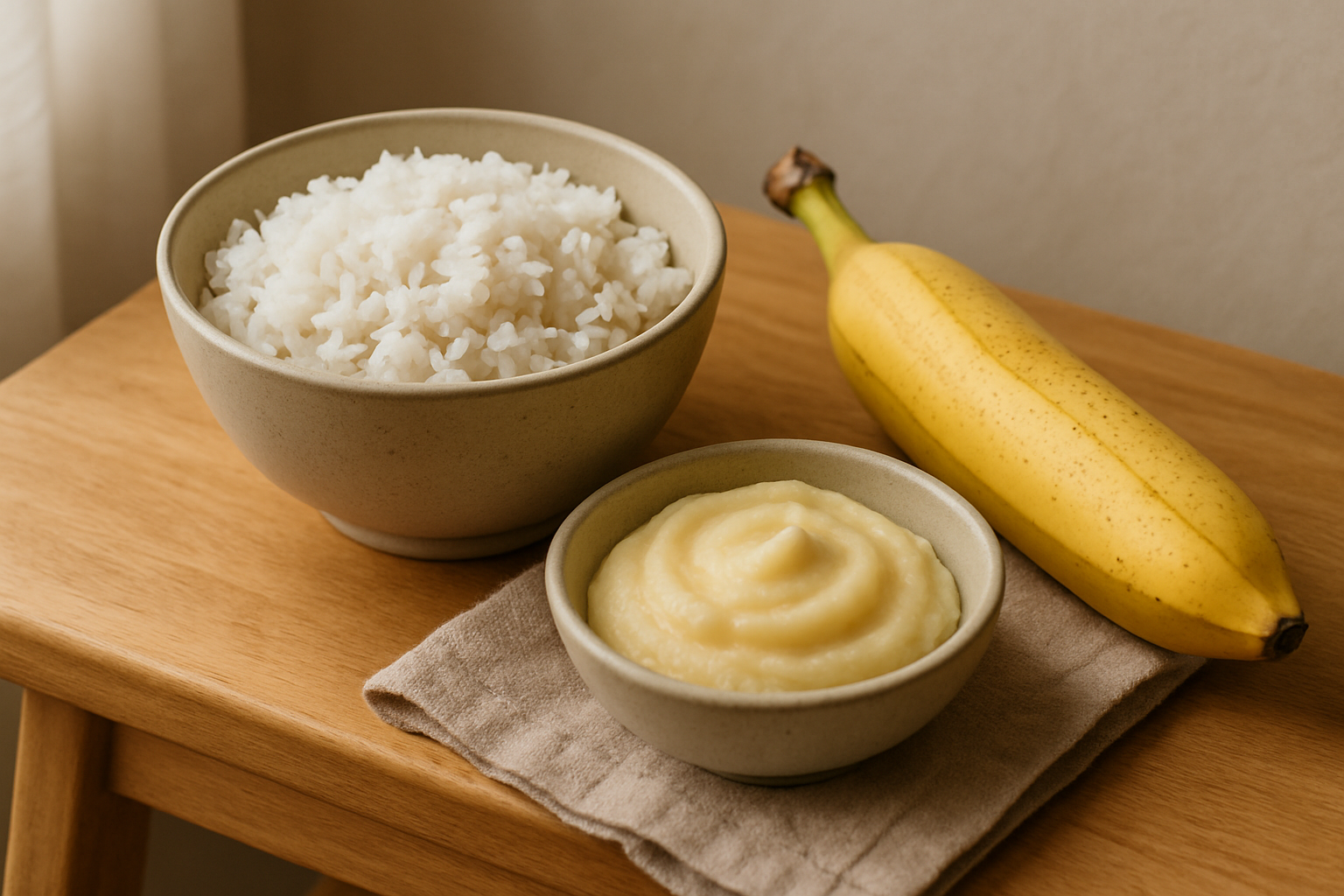
You've eaten something, and an hour later your output has gone watery and fast. You want to know what to reach for that might slow things down and add a bit of body. That's the binding question, and it's one of the most practical things you can learn about your gut.
On this site we score foods on a binding (B) axis — how much a food might help thicken output. It's a modelled estimate, not a promise. But the idea behind it is real, and it's worth understanding so you can use these foods on purpose rather than by accident.
Why some foods thicken output
Loose output usually means water is moving through faster than your gut can reabsorb it. Binding foods help in one of two ways: they soak up water, or they form a gel that slows everything down.
The gel part comes from soluble fibre — a type of fibre that dissolves in water and turns thick, a bit like porridge sitting in the pot. Oats, white rice and bananas all have it. Starchy, low-fibre foods work differently: they're easy to digest and don't pull extra water in, so they give your output something solid to build on.
The evidence here is reasonably strong for the general principle. What's less certain is how much any one food will do for your gut on a given day. That varies a lot.
The everyday binders worth leaning on
These are the foods many people with a J-pouch or ostomy come back to when output gets loose:
- White rice — plain, well-cooked. A classic for a reason.
- Bananas — riper ones are gentler; they're a good source of soluble fibre.
- White bread and plain crackers — low fibre, easy starch.
- Oats — porridge made thick rather than runny.
- Mashed potato (peeled) and peeled sweet potato in small amounts.
- Smooth peanut butter — fat and protein slow transit a little.
- Marshmallows and plain stewed apple — old ostomy-nurse suggestions that some people swear by.
- Tapioca and plain pasta — gentle starches that add bulk.
None of these are magic. They're tools. White rice was the food a lot of people lean on for a stretch after surgery, and there's no shame in eating plain for a while.
How to actually use them
The trick isn't just what you eat, it's how.
- Eat them dry-ish. Drinking large amounts of fluid with a binding meal can wash the effect away. Many people find sipping between meals rather than during works better.
- Small and steady beats one big load. A handful of crackers across the afternoon often settles output more than a giant bowl of rice at once.
- Pair a binder with whatever's setting you off. If a meal tends to run through you, adding rice or bread to it can take the edge off.
- Give it time. Output reflects what you ate hours ago, not minutes. Don't judge a food by the next loo trip alone.
A word on overdoing it
Binders can swing too far the other way. Lean on them hard for days and output can get thick, sticky and harder to pass — and for ostomates, that raises the (small) risk of a blockage if you're also low on fluid. Watery output also means you're losing salt and water, so keep drinking, ideally something with a bit of salt and sugar in it rather than plain water alone.
If output stays loose for more than a day or two, or you're losing a lot of fluid and feeling drained, that's a conversation for your stoma nurse or team — not something to fix with crackers alone.
Test one thing at a time
Everyone's gut is different, and the same banana that firms you up might do nothing for the person next to you. So bring in one binder at a time and watch what happens over a day, rather than throwing the whole list at a bad afternoon.
If you want to see how individual foods score on the binding axis, you can browse the food scores or read how the scores work first. The scores point you in a direction. Your own gut, over a week or two, tells you the rest.