Hi, we're Toots & Trots — and why we built this
By Robin Tasker · 22 June 2026 · 3 min read
The first sign something was wrong was almost funny: firm stools, but passing with water. Then the water turned pink. That was blood, and it was the start of about eighteen months I won't forget.
How I got here
A colonoscopy found severe inflammation low in my bowel. I tried steroids and enemas and got passed between specialists, but I kept sliding — losing weight, barely keeping food down, still bleeding. I ended up in hospital, and after ten days of IV drugs that didn't work, my bowel was close to perforating. It became emergency surgery: six and a half hours, and my whole large bowel gone. The diagnosis came back as ulcerative colitis.
Earlier this year I had two more operations — one to build a J-pouch from what was left, and one to connect it back up. Which brings me to now: a couple of months in, learning to live with it.
The bit nobody warns you about
The early days with a J-pouch are humbling. Some days it's ten, twelve, fifteen trips to the loo. Sleep comes in broken pieces. There's wind you can't quite trust, and nights I've woken to a mess. You get told to "eat low residue" and "ease off your triggers" — but when you're new to this, you've no idea what your triggers even are.
So I built a way to find out
I started scoring my own food — rating everyday meals on how likely they were to stir up the gas and the looseness — so I could quietly take the worst offenders off my plate and calm things down.
It grew into Toots & Trots. It's early days, but following my own scores I've genuinely noticed a difference: fewer trips, longer stretches of sleep, calmer nights. That's my own experience, not a promise, and not medical advice — everyone's gut is different. But it helped me enough that I wanted to put it in other people's hands.
Three things, not one
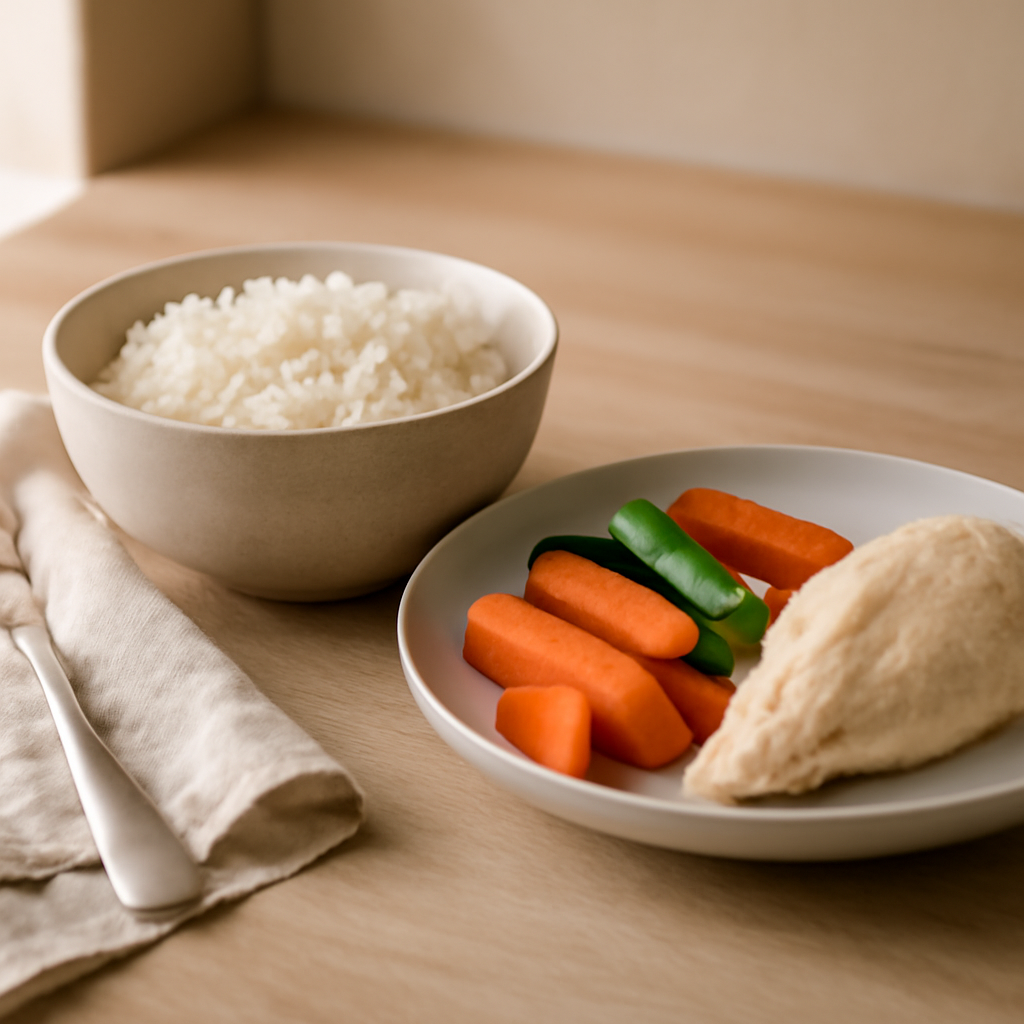
Here's the part I care about most. It would be easy to build a tool that just says "eat the blandest, gentlest thing, every time". But the gentlest diet isn't a healthy one, and a beige plate is a miserable way to live.
So we score every food three ways:
- Gentle — how easy it's likely to be on your gut.
- Nourishing — how much goodness it actually gives you, because gentle isn't the same as healthy.
- Tasty — how much flavour it brings, because food should still be a pleasure.
Gentle on your gut, good for you, still a joy to eat. That's the whole idea — and it's why we lean so hard on cooking one meal the family shares, with the chilli or the pickled onion added to their plates, not mine.
If you're somewhere on this road
Whether you've got a J-pouch, an ostomy, IBD or IBS, I hope this makes the food part a little less of a guessing game. Start with one gentle swap, see what your gut makes of it, and go easy on yourself — this stuff is hard.
— Robin