Thickening vs Loosening Foods: J-Pouch and Ostomy Output
By Mira Sefton · 23 June 2026 · 4 min read
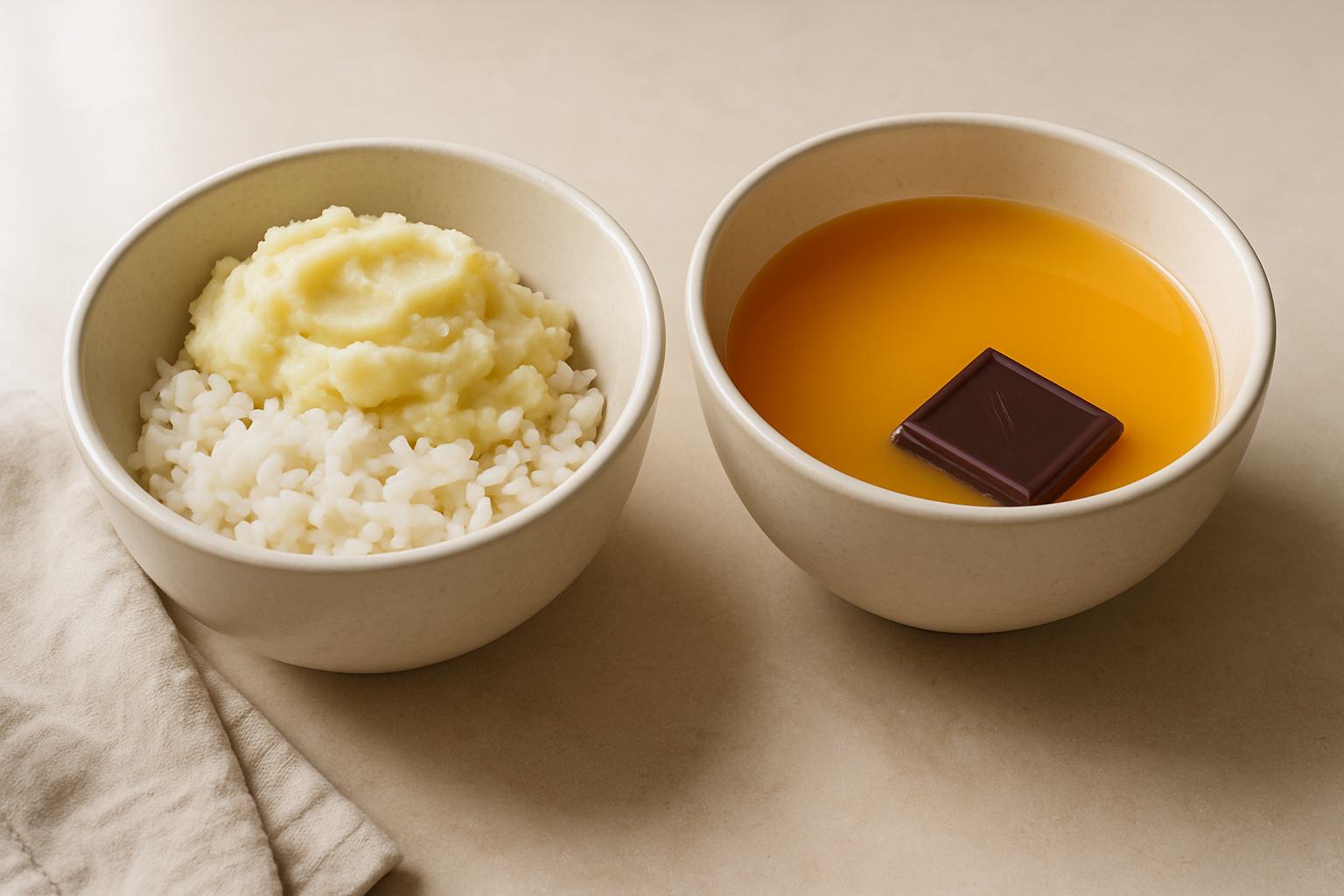
You've probably noticed it already: some meals leave your output watery and frequent, and others slow things right down. The trick is working out which is which for your gut, because the lists you find online are starting points, not promises.
Let me walk you through what tends to thicken and what tends to loosen, and where the evidence is solid versus where it's more of a rough pattern.
Why output changes at all
Your output is mostly about two things: how much water stays in the mix, and how fast everything moves through. Thickening foods either soak up water or slow the gut down. Loosening foods do the opposite.
With a J-pouch or an ostomy, you've lost some of the colon's job of reabsorbing water. So food choices matter more than they did before — but so does timing, how much you eat at once, and how well you chew.
The evidence here is decent for the broad categories. The detail — whether your serving of oats helps or does nothing — is something only you can test.
Foods that tend to thicken
These pull water in or add bulk. Many people reach for them on a loose day.
- White rice and white pasta
- White bread and plain crackers
- Mashed potato (without much added milk or butter)
- Bananas, especially slightly underripe ones
- Smooth peanut butter
- Oats and porridge
- Apple sauce (cooked apple, skin off)
- Marshmallows and jelly lollies — odd but they genuinely work for some people
- Pretzels and plain pastry
The common thread is starchy, low-fibre, gentle to break down. Oats are the interesting one — the soluble fibre forms a gel that thickens output for a lot of people, though a few find it does the reverse.
Foods that tend to loosen
These speed the gut up, draw water in, or ferment quickly and produce gas and looser output.
- Coffee and other caffeine
- Fizzy drinks and fruit juice
- Very sugary foods and anything with sorbitol or other sugar alcohols (often in sugar-free gum and lollies)
- Spicy food
- Alcohol, especially beer and wine
- Fried and greasy meals
- Raw vegetables and salads in big amounts
- Prunes, prune juice and a lot of dried fruit
- Leafy greens like spinach for some people
Sugar alcohols are worth a flag. Anything labelled "sugar-free" might contain sorbitol or mannitol, which pull water into the bowel and can loosen things fast. The maths catches people out.
A quick reference
| Tends to thicken | Tends to loosen |
|---|---|
| White rice, pasta | Coffee, caffeine |
| Banana (firmer) | Fruit juice, fizzy drinks |
| Mashed potato | Spicy food |
| Oats, porridge | Fried food |
| Smooth peanut butter | Sugar alcohols (sorbitol) |
| Apple sauce | Alcohol |
| White bread, crackers | Prunes, lots of dried fruit |
The bits that aren't about food
Food is only half the picture. A few habits shift output as much as any meal:
- Sipping fluids between meals rather than with them can slow transit a little.
- Oral rehydration drinks help more than plain water on a high-output day, because the salt and sugar balance helps you hold onto fluid.
- Eating smaller amounts more often tends to give steadier output than one big plate.
- Chewing properly does real work — large food pieces move through faster.
If your output is high for days and you feel weak, lightheaded or you're getting cramps, that's a chat with your stoma nurse or doctor, not a food tweak. Dehydration sneaks up.
How to actually find your list
The printed lists are a map, not your territory. Bananas thicken most people and do nothing for a few. Oats are a coin toss.
So change one thing at a time. Try a thickening food on its own, give it a day or two, and notice what your output does. Keep a short note on your phone — you'll spot patterns faster than you'd think.
If you want a starting score for a specific food, you can browse the food scores or read how the scores work so you know they're modelled estimates, not rules. Your gut gets the final say.