What Makes J-Pouch Output Runnier: The S in GASP
By Mira Sefton · 16 June 2026 · 4 min read
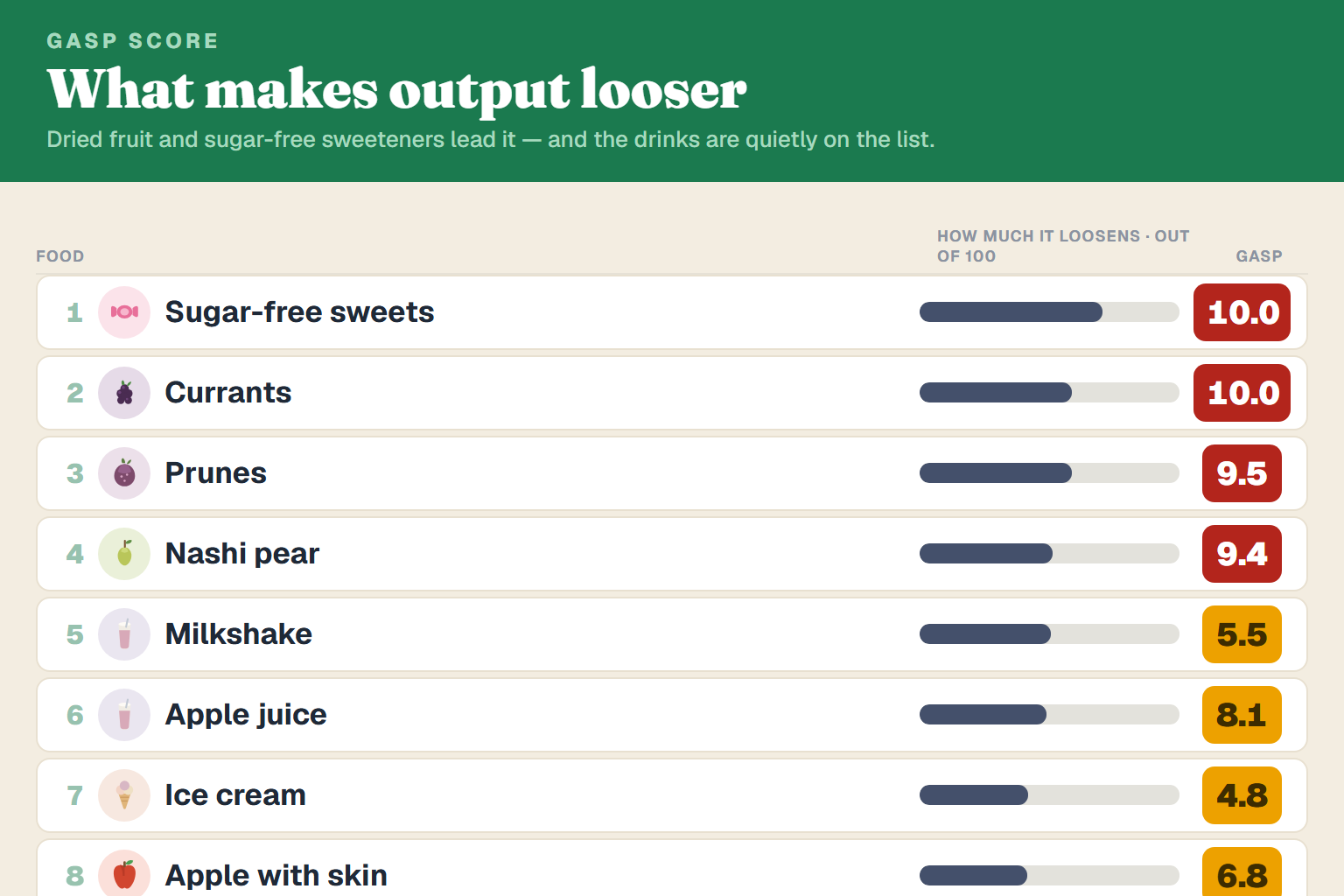
You've eaten something, and twenty minutes later you're heading for the loo with output that's more water than anything else. So what actually made it runnier?
That's the question the Stool-loosening score — the S in our GASP score — tries to answer. It's an estimate of how much a food tends to make output looser, faster, or both. For a lot of people with a J-pouch or ostomy, this is the number that matters most day to day, because looser output means more trips, more urgency, and more fluid lost.
What pulls water into the gut
The biggest driver is osmosis. Some carbs aren't absorbed well, so they sit in the gut and pull water in to dilute themselves. More water in equals looser, faster output.
The usual culprits:
- Sugar alcohols (polyols) like sorbitol, xylitol and mannitol. These are in sugar-free gum, mints and lollies, and they turn up naturally in stone fruit, pears and prunes. They're famous for loosening output.
- Big hits of fructose — think a tall glass of apple or pear juice, or a lot of honey. Fructose in large amounts can outpace what the gut absorbs.
- Very sugary drinks. A fizzy drink or cordial is concentrated sugar, and that concentration drags water into the gut rather than helping you absorb it.
The evidence on polyols and concentrated sugars loosening output is strong. This is well-understood gut chemistry, not a guess.
Free water, fat and speed
A few other things push output looser, and they're worth knowing.
Foods that are mostly water. Watermelon, a big bowl of broth, lots of juicy fruit — they deliver fluid fast, which can thin things out if you're already prone to runny output.
Fat and bile. After surgery, bile (the stuff that helps you digest fat) doesn't always get reabsorbed the way it used to. Leftover bile can irritate the gut and loosen output. So a very greasy meal — a big serve of hot chips, a creamy takeaway — sometimes shows up later as faster, looser output. How much this affects you depends a lot on your own plumbing, so this part is more variable person to person.
Anything that speeds transit. Caffeine, alcohol and very spicy food can hurry things along. Less time in the gut means less water gets reabsorbed, so output stays loose.
Gentler moves people often try
The whole point of the tool is simple: slow it down, firm it up, stay hydrated. Here are the moves people commonly reach for. None of these is a rule — everyone's gut is different.
- Cook things soft. Well-cooked vegetables are usually gentler than raw. Heat does some of the breaking-down for you.
- Pair a looser food with a starchy binder. A bit of fruit alongside rice, potato or white toast lands differently than fruit on its own. The starch helps firm things up.
- Smaller serves. A small amount of a loosening food often passes quietly. A big plate of it is what brings the trouble.
- Sip, don't chug. Skip the big glass of sugary juice. Many people find a drink with electrolytes, sipped slowly through the day, helps with hydration far better than gulping something sweet. Concentrated sugar drinks can actually pull water out of you.
The counterweight: Binding
Stool-loosening doesn't sit on its own. We also score how binding a food is — how much it tends to firm and slow output. Starchy, low-residue foods like white rice, potato, white bread and bananas sit on the firming side.
The trick most people land on is balance. If you fancy something on the loosening side, you can lean on a binder in the same meal to even it out. (We'll dig into the Binding axis properly in its own post.)
A quick way to picture it:
| Tends to loosen | Tends to firm |
|---|---|
| Sugar-free mints (sorbitol) | White rice |
| Pear or apple juice | Banana |
| Very greasy meals | Potato |
| Caffeine, alcohol | White toast |
One honest reminder
The S score is a modelled estimate, not a verdict on the food and not medical advice. It tells you which way a food usually leans, so you can plan. Your own gut gets the final say.
If you're testing something new, try it on its own and in a small serve, so you can actually tell what did what. One thing at a time beats guessing after a mixed meal.
If loose output and dehydration are a regular battle for you, that's worth raising with your team — and you can browse the food scores to spot the gentler options while you sort it out.