Why Some Foods Cause More Wind — and Gentler Swaps
By Mira Sefton · 23 June 2026 · 4 min read
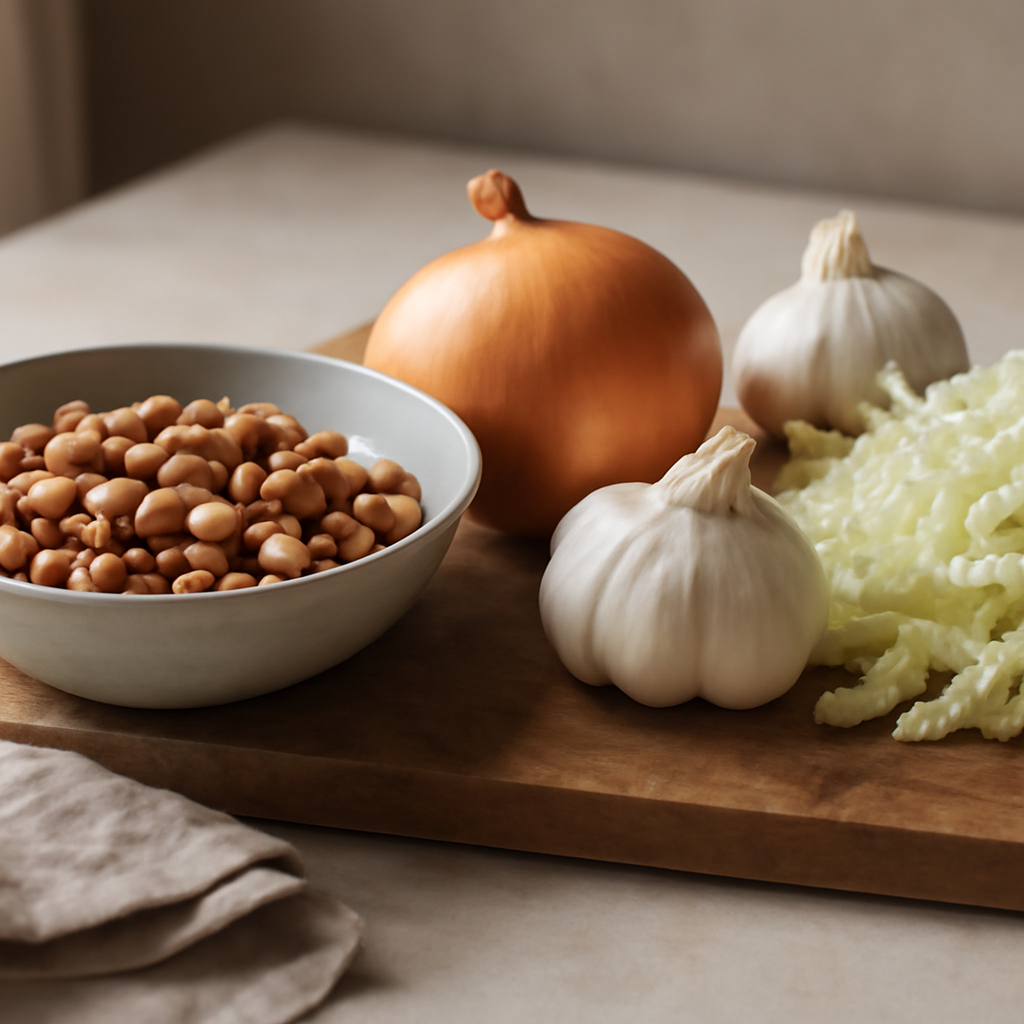
You eat a normal-looking lunch, and an hour later your gut sounds like a kettle coming to the boil. The toots part of Toots & Trots is real life for most of us, and it helps to know what's actually driving it.
The short version: wind comes from the bacteria in your gut eating the bits of food your body didn't fully break down. Some foods give those bacteria a big, fast meal. Others give them very little. That difference is most of what our gas (G) score is trying to capture.
What actually makes the wind
Most gut wind isn't swallowed air (though some is). It's gas the bacteria in your large bowel produce when they ferment leftovers — mostly certain carbs and some types of fibre.
The main culprits are:
- Fructans — a carb that ferments quickly. Found in onion, garlic, wheat and leek.
- GOS (galacto-oligosaccharides) — the fermentable fibre in beans, lentils and chickpeas.
- Polyols — sugar alcohols like sorbitol and mannitol, in some stone fruit, mushrooms and sugar-free gum.
- Excess fructose — when a food has more fructose than glucose, as in apples, pears and honey.
The more of these a food carries, the more fuel reaches your bacteria, and the more wind tends to follow. The evidence linking these carbs to gas is strong — this is the best-studied part of the whole FODMAP picture.
Why fibre is a mixed bag
Fibre isn't one thing, and it doesn't all behave the same way. That trips a lot of people up.
Fermentable fibre — the soft, soluble kind in beans, onion and ripe fruit — is exactly what your bacteria love to feast on. That's good for a general gut, but it's the same process that fills you with wind. Less fermentable fibre, like the tougher stuff in the skin of a sweet potato, passes through more quietly.
So "high fibre" and "lots of wind" aren't the same claim. It depends which fibre.
The usual suspects, and what to try instead
None of these foods is off-limits. They just carry a heavier fermentable load, so they're harder work for some guts on some days. Here are gentler stand-ins that give you a similar flavour or role with less to ferment.
| Higher-wind food | Why | Gentler swap |
|---|---|---|
| Onion | High in fructans | Green tops of spring onion, or chives |
| Garlic | High in fructans | Garlic-infused oil (the fructans don't dissolve into oil) |
| Baked beans | GOS + fructans | A small spoon of tinned, rinsed lentils |
| Apple | Excess fructose + sorbitol | A ripe banana or a handful of grapes |
| Mushrooms | Mannitol (a polyol) | Capsicum or courgette |
| Wheat pasta | Fructans in larger serves | A smaller serve, or rice noodles |
| Cauliflower | Polyols | Carrot or green beans |
The oil trick with garlic is a genuinely useful one. Fructans don't move into oil, so you keep the flavour and skip most of the fermentable load.
Portion is half the story
Here's the part people miss: dose matters as much as the food. A whole apple might leave you bloated where ten grapes won't. Half a slice of bread is a different thing from three slices.
Many people find a food sits fine in a small amount and only causes trouble past a certain point. So before you write something off, it's worth trying a smaller serve rather than none.
How to test your own culprits
Your gut isn't anyone else's, and it changes over time. The scores here are modelled estimates to point you somewhere sensible — they're a starting guess, not a verdict.
A calm way to find your own pattern:
- Change one thing at a time. If you swap onion and garlic in the same week, you won't know which helped.
- Keep serves steady while you test, so you're not changing food and amount at once.
- Give it a few days. One quiet afternoon doesn't prove much.
If you want the detail on what the G number means and how we work it out, here's how the scores work. And if you'd rather just poke around, you can browse food scores and start with whatever you ate yesterday.
Wind is one of the least dignified things a gut does, and also one of the most normal. Knowing which foods load up your bacteria takes a bit of the mystery out of it — and usually there's a swap that keeps the meal you wanted.