Why Some Foods Cause More Wind (and Gentler Swaps)
By Mira Sefton · 23 June 2026 · 3 min read
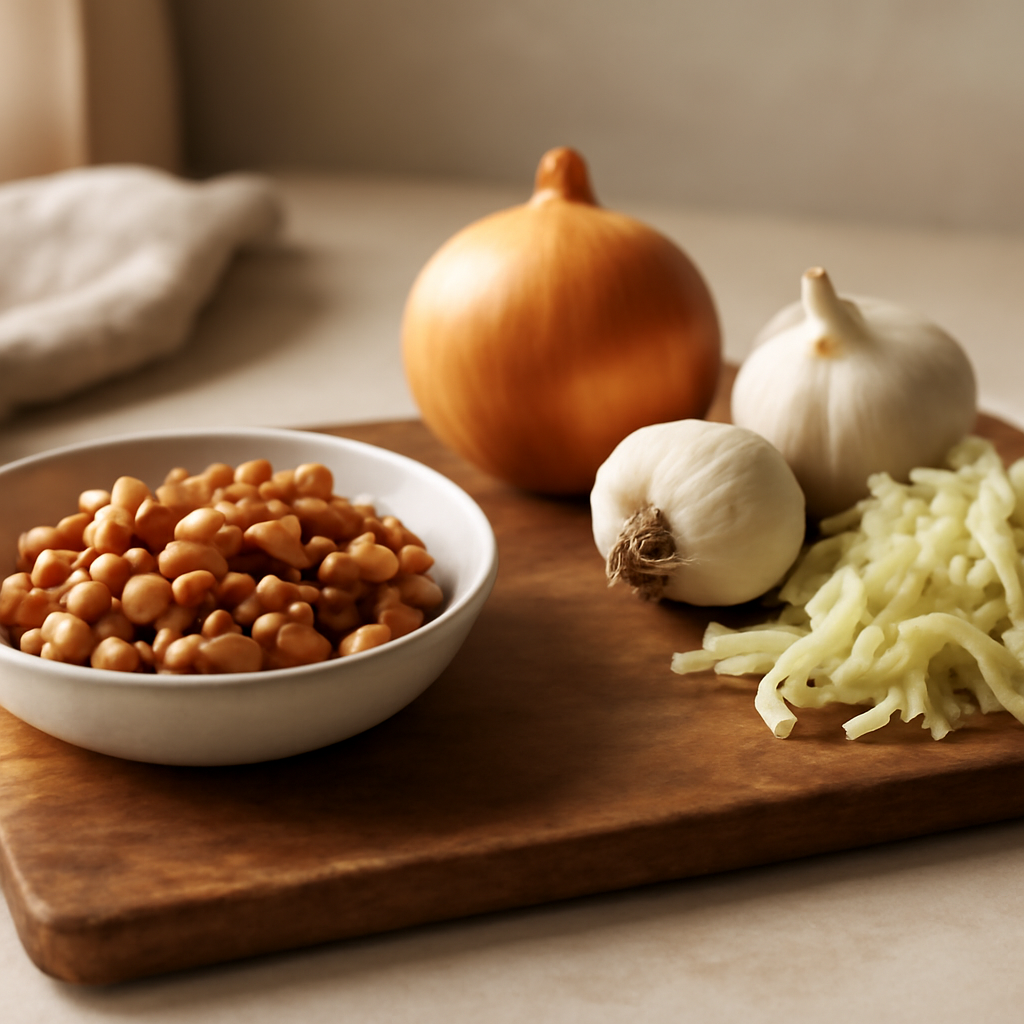
You eat a perfectly normal lunch, and an hour later your gut sounds like a kettle coming to the boil. So what's going on, and why do some foods set it off more than others?
The short version: wind is mostly fermentation. Bugs in your large bowel (and, for a J-pouch, in the pouch itself) feed on certain carbs that your small intestine didn't fully absorb. When they eat, they make gas. More fermentable food in equals more gas out. That's the whole idea behind the G axis in our scores.
What the gas score is measuring
The G in our scores is an estimate of how much wind a food is likely to make, based on its fermentable fibre and fast-fermenting carbs. Things like fructans (a carb that ferments quickly), the sugar alcohols in some fruit and sweeteners, and the raffinose family in beans all score higher.
A high G doesn't mean a food is off-limits. It means it tends to make more gas for more people. Your own gut might shrug at something that floors someone else. The evidence that these carbs ferment is strong; how much you react is the part only you can test.
The usual wind culprits
Few foods are as reliably gassy as these:
- Onion and garlic — loaded with fructans, and they hide in nearly every sauce and stock. See onion.
- Legumes — baked beans, chickpeas, lentils, kidney beans. Famous for a reason.
- Brassicas — broccoli, cauliflower, cabbage, brussels sprouts.
- Sugar alcohols — sorbitol, mannitol, xylitol. Common in sugar-free gum, mints and some stone fruit.
- Fizzy drinks — the gas goes in already made.
For a sensitive J-pouch, the legumes and brassicas are often the loudest. Onion and garlic are the sneakiest, because you don't always know they're in the meal.
Gentler swaps to try
You don't have to give up flavour or a whole food group. Most of the time you can drop the load without dropping the dish.
| Higher-wind | Gentler stand-in |
|---|---|
| Onion and garlic | The green tops of spring onion; garlic-infused oil (the flavour's oil-soluble, the fructans aren't) |
| Baked beans | A smaller scoop of firm tofu or canned, rinsed lentils |
| Broccoli and cauliflower | Courgette, green beans, well-cooked carrot |
| Apple and pear | Kiwifruit, a small banana, orange segments |
| Sugar-free gum | A plain mint without sorbitol, or none |
That garlic-infused oil trick is worth knowing. Fructans don't dissolve into oil, so you get the garlic taste without the fermenting carb. The evidence on that one is solid.
Small things that change a lot
How you eat matters nearly as much as what.
- Cooking softens the load. Well-cooked vegetables are usually gentler than raw. A roasted carrot beats a raw one.
- Portion is a dial, not a switch. Half a cup of lentils might be fine where a full cup isn't. Start small.
- Slow down. Eating fast, talking with your mouth full and using a straw all swallow air, which comes out the other end.
- Fizzy and chewing gum add gas with no fermentation needed.
Reintroduce one thing at a time
The reason wind is so hard to pin down is that meals are mixtures. If your lunch had onion, beans and a fizzy drink, you've no idea which one did it.
So when you're testing, change one variable. Try a small amount of one food, on a day when the rest of your meals are familiar, and see what your gut says over the next few hours. Write it down if you can — patterns show up faster on paper than in your memory.
Everyone's gut is different, and a pouch's tolerance shifts over weeks and months. Something loud today can settle later. Browse the food scores to compare G across foods, and read how the scores work if you want the detail behind the number.